Crucible
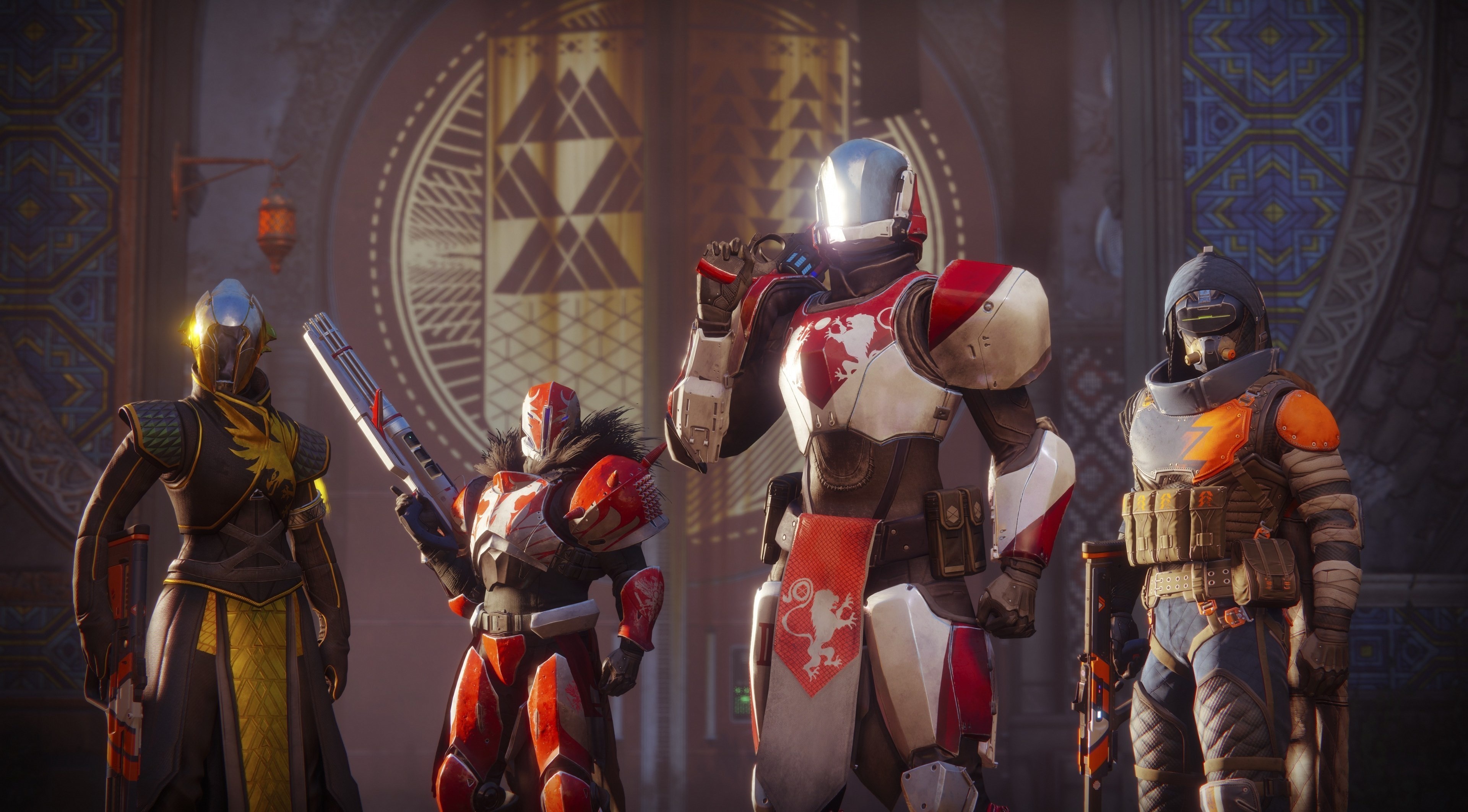
The Crucible is a competitive player-vs-player (PvP) multiplayer activity in Destiny 2. Players can earn loot by completing Crucible matches.
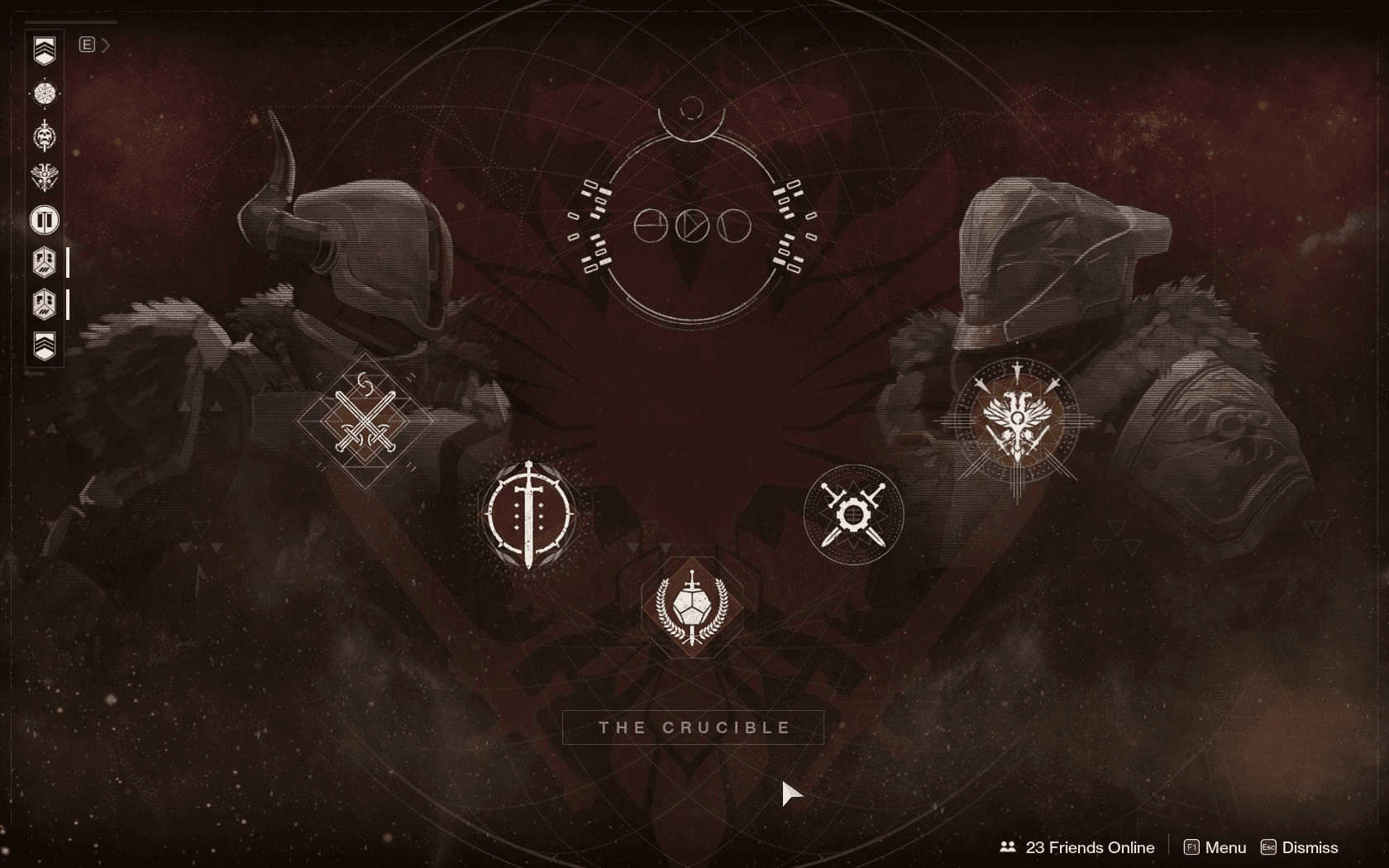
In Season 8 the Crucible UI layout supported up to 6 nodes. At the time, this screen was designed with only visual aesthetics in mind. For Season 9, the PvP designers wanted to add more game modes (aka playlists) for players to choose from. A total of 18 playlist nodes needed to be featured on the new Crucible screen. The layout also required space for the monthly Iron Banner event.
Role
UX / Visual Design
Team
Ryan Klaverweide (Lead),
Tyson Steele
Type
PS4 / Xbox / PC
Deliverables
Wireframes, Visual Design
Problem
With 18 game types to choose from, how do we update the Crucible menu UI to support the new game types (AKA Playlists) along with the inclusion of the monthly Iron Banner Event?
Solution
Distinguishing between persistent and rotating playlists, I've crafted a dynamically adaptive UI that preserves layout and aesthetic integrity. I've also enhanced visual appeal with competitive imagery in the background, resonating with PvP game modes.
Aligning
Goals
The Season 9 Crucible visual redesign was scoped to begin in the last two sprints of the Shadowkeep release. UI typically comes last in production, which gave the PvP team adequate time to define the specs for this screen.
The Season 9 Crucible visual redesign was scoped to begin in the last two sprints of the Shadowkeep release. UI typically comes last in production, which gave the PvP team adequate time to define the specs for this screen.
The Season 9 Crucible visual redesign was scoped to begin in the last two sprints of the Shadowkeep release. UI typically comes last in production, which gave the PvP team adequate time to define the specs for this screen.
The Season 9 Crucible visual redesign was scoped to begin in the last two sprints of the Shadowkeep release. UI typically comes last in production, which gave the PvP team adequate time to define the specs for this screen.
• Out of 18 nodes total, the 4 main playlists were to be the most prominent nodes on the screen.
• All other nodes should be arranged based on their categories.
• Out of 18 nodes total, the 4 main playlists were to be the most prominent nodes on the screen.
• All other nodes should be arranged based on their categories.
• Out of 18 nodes total, the 4 main playlists were to be the most prominent nodes on the screen.
• All other nodes should be arranged based on their categories.
• Out of 18 nodes total, the 4 main playlists were to be the most prominent nodes on the screen.
• All other nodes should be arranged based on their categories.
Luckily our game designers realized that adding up to 18 nodes was going to make the screen look too crowded. Instead, all 4v4 and 6v6 playlists would function as “Rotators”. Rotator nodes will switch to a different game type every week so that players can access a different playlist on a weekly basis.
Luckily our game designers realized that adding up to 18 nodes was going to make the screen look too crowded. Instead, all 4v4 and 6v6 playlists would function as “Rotators”. Rotator nodes will switch to a different game type every week so that players can access a different playlist on a weekly basis.
Luckily our game designers realized that adding up to 18 nodes was going to make the screen look too crowded. Instead, all 4v4 and 6v6 playlists would function as “Rotators”. Rotator nodes will switch to a different game type every week so that players can access a different playlist on a weekly basis.
Luckily our game designers realized that adding up to 18 nodes was going to make the screen look too crowded. Instead, all 4v4 and 6v6 playlists would function as “Rotators”. Rotator nodes will switch to a different game type every week so that players can access a different playlist on a weekly basis.
Research
Due to the short timeline of this feature, conducting new user research would not be a part of the initial process. Instead, we'll relied upon existing data that sheds light on players' expectations when they interact with this screen.
Due to the short timeline of this feature, conducting new user research would not be a part of the initial process. Instead, we'll relied upon existing data that sheds light on players' expectations when they interact with this screen.
Due to the short timeline of this feature, conducting new user research would not be a part of the initial process. Instead, we'll relied upon existing data that sheds light on players' expectations when they interact with this screen.
Due to the short timeline of this feature, conducting new user research would not be a part of the initial process. Instead, we'll relied upon existing data that sheds light on players' expectations when they interact with this screen.
Discussions with the dev team led me to obtain the following information:
Discussions with the dev team led me to obtain the following information:
Discussions with the dev team led me to obtain the following information:
Discussions with the dev team led me to obtain the following information:
• Players who enjoy Crucible are hardcore players who often visit this screen. With each release, players know that any layout changes means new game types have been added.
• When it comes to interacting with the elements on the screen, players understand that hovering “nodes” reveals the game type in the form of a tool tip. The typical Destiny player has learned that nearly all art elements have this interactable aspect to them.
• Players can also identify game types at a glance by the distinct designs of the icons. Because players have learned to recognize this language over time, it’s important to maintain the core design of these nodes.
• Players who enjoy Crucible are hardcore players who often visit this screen. With each release, players know that any layout changes means new game types have been added.
• When it comes to interacting with the elements on the screen, players understand that hovering “nodes” reveals the game type in the form of a tool tip. The typical Destiny player has learned that nearly all art elements have this interactable aspect to them.
• Players can also identify game types at a glance by the distinct designs of the icons. Because players have learned to recognize this language over time, it’s important to maintain the core design of these nodes.
• Players who enjoy Crucible are hardcore players who often visit this screen. With each release, players know that any layout changes means new game types have been added.
• When it comes to interacting with the elements on the screen, players understand that hovering “nodes” reveals the game type in the form of a tool tip. The typical Destiny player has learned that nearly all art elements have this interactable aspect to them.
• Players can also identify game types at a glance by the distinct designs of the icons. Because players have learned to recognize this language over time, it’s important to maintain the core design of these nodes.
• Players who enjoy Crucible are hardcore players who often visit this screen. With each release, players know that any layout changes means new game types have been added.
• When it comes to interacting with the elements on the screen, players understand that hovering “nodes” reveals the game type in the form of a tool tip. The typical Destiny player has learned that nearly all art elements have this interactable aspect to them.
• Players can also identify game types at a glance by the distinct designs of the icons. Because players have learned to recognize this language over time, it’s important to maintain the core design of these nodes.
Wireframes
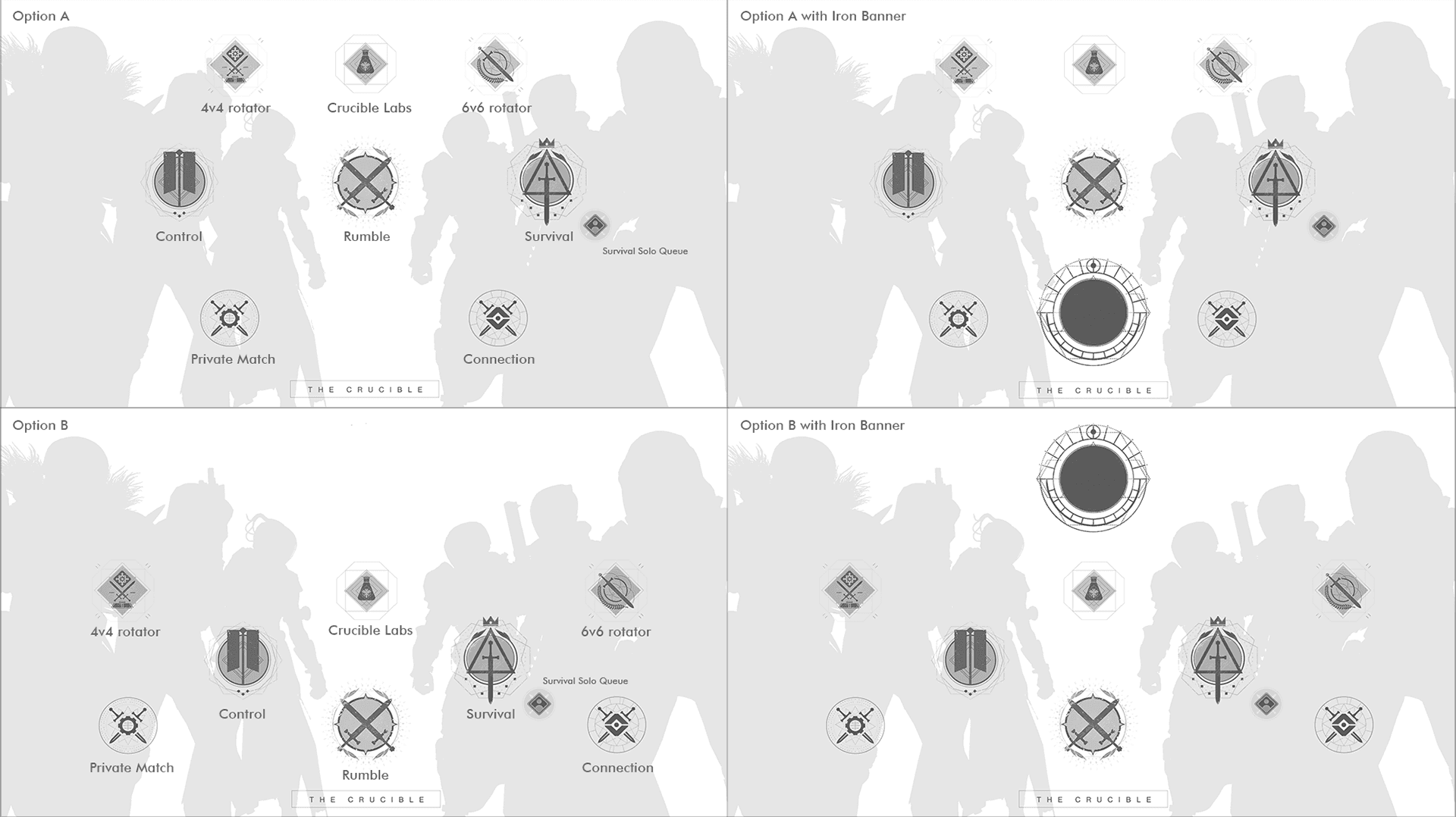
With these specs in mind, two wireframes were produced.
• The 3 Main playlist nodes are larger and grouped in the center. They also now use a circular shape to help establish a new variant of our design language. Survival Solo Queue now lives as a new icon next to the larger Survival node. Because it is essentially the same game type, we chose not to show the same large node twice.
• Rotators and Crucible Labs are now grouped together above the main playlist nodes. 4v4 and 6v6 Rotators now use a “diamond” shape language to communicate that this node functions as a rotator, and will come and go from this screen. Crucible Labs is an experimental playlist that comes and goes randomly, so we also grouped it as a rotator. Hovering over a rotator will also reveal additional tool tip information on the game type.
• Private Match and Connection are two unrelated playlists that are less emphasized and separated due to low player engagement. This separation also allows space to enable the playlist for Iron Banner.
With these specs in mind, two wireframes were produced.
• The 3 Main playlist nodes are larger and grouped in the center. They also now use a circular shape to help establish a new variant of our design language. Survival Solo Queue now lives as a new icon next to the larger Survival node. Because it is essentially the same game type, we chose not to show the same large node twice.
• Rotators and Crucible Labs are now grouped together above the main playlist nodes. 4v4 and 6v6 Rotators now use a “diamond” shape language to communicate that this node functions as a rotator, and will come and go from this screen. Crucible Labs is an experimental playlist that comes and goes randomly, so we also grouped it as a rotator. Hovering over a rotator will also reveal additional tool tip information on the game type.
• Private Match and Connection are two unrelated playlists that are less emphasized and separated due to low player engagement. This separation also allows space to enable the playlist for Iron Banner.
With these specs in mind, two wireframes were produced.
• The 3 Main playlist nodes are larger and grouped in the center. They also now use a circular shape to help establish a new variant of our design language. Survival Solo Queue now lives as a new icon next to the larger Survival node. Because it is essentially the same game type, we chose not to show the same large node twice.
• Rotators and Crucible Labs are now grouped together above the main playlist nodes. 4v4 and 6v6 Rotators now use a “diamond” shape language to communicate that this node functions as a rotator, and will come and go from this screen. Crucible Labs is an experimental playlist that comes and goes randomly, so we also grouped it as a rotator. Hovering over a rotator will also reveal additional tool tip information on the game type.
• Private Match and Connection are two unrelated playlists that are less emphasized and separated due to low player engagement. This separation also allows space to enable the playlist for Iron Banner.
With these specs in mind, two wireframes were produced.
• The 3 Main playlist nodes are larger and grouped in the center. They also now use a circular shape to help establish a new variant of our design language. Survival Solo Queue now lives as a new icon next to the larger Survival node. Because it is essentially the same game type, we chose not to show the same large node twice.
• Rotators and Crucible Labs are now grouped together above the main playlist nodes. 4v4 and 6v6 Rotators now use a “diamond” shape language to communicate that this node functions as a rotator, and will come and go from this screen. Crucible Labs is an experimental playlist that comes and goes randomly, so we also grouped it as a rotator. Hovering over a rotator will also reveal additional tool tip information on the game type.
• Private Match and Connection are two unrelated playlists that are less emphasized and separated due to low player engagement. This separation also allows space to enable the playlist for Iron Banner.
Visual Design
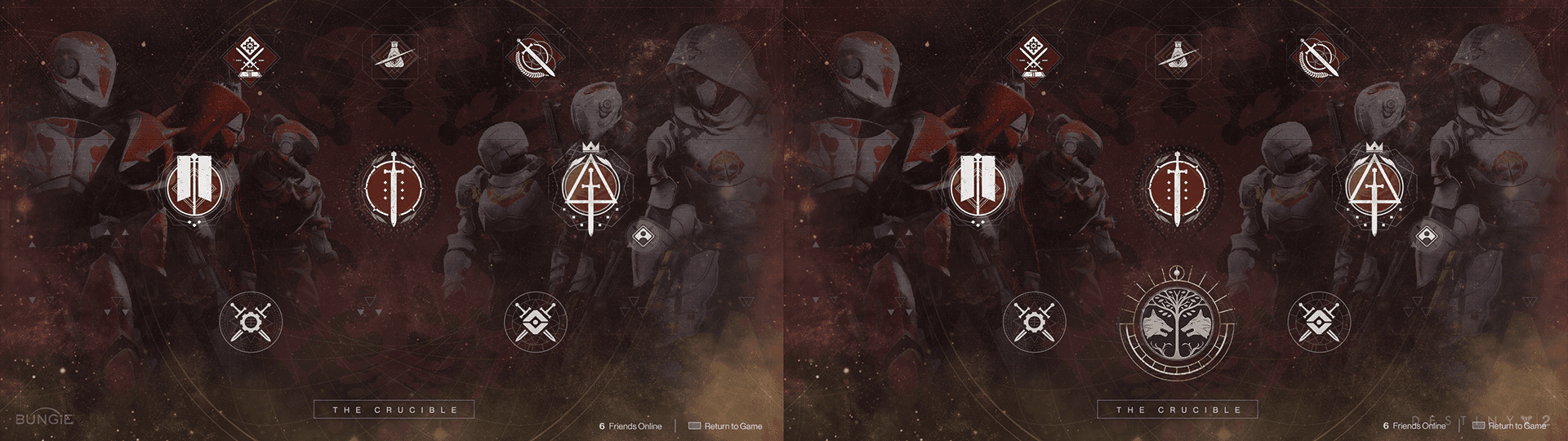
After the team responded positively towards this layout, a full Visual Design pass was made.
After the team responded positively towards this layout, a full Visual Design pass was made.
After the team responded positively towards this layout, a full Visual Design pass was made.
After the team responded positively towards this layout, a full Visual Design pass was made.
Icon Design
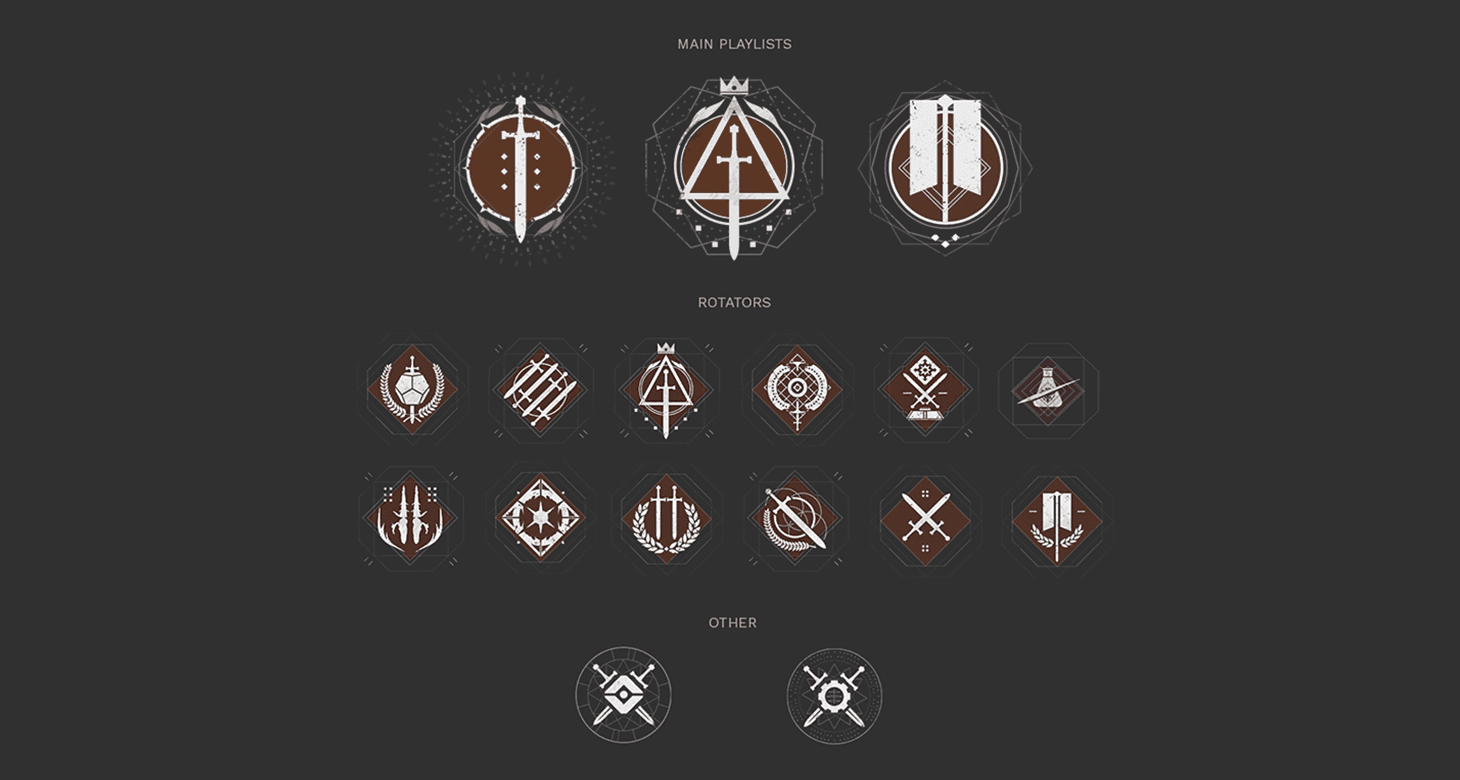
Icons that have shipped in previous seasons were redesigned to accommodate our new design language. The core icon art remained the same to preserve recognizability.
Icons that have shipped in previous seasons were redesigned to accommodate our new design language. The core icon art remained the same to preserve recognizability.
Icons that have shipped in previous seasons were redesigned to accommodate our new design language. The core icon art remained the same to preserve recognizability.
Icons that have shipped in previous seasons were redesigned to accommodate our new design language. The core icon art remained the same to preserve recognizability.
Results
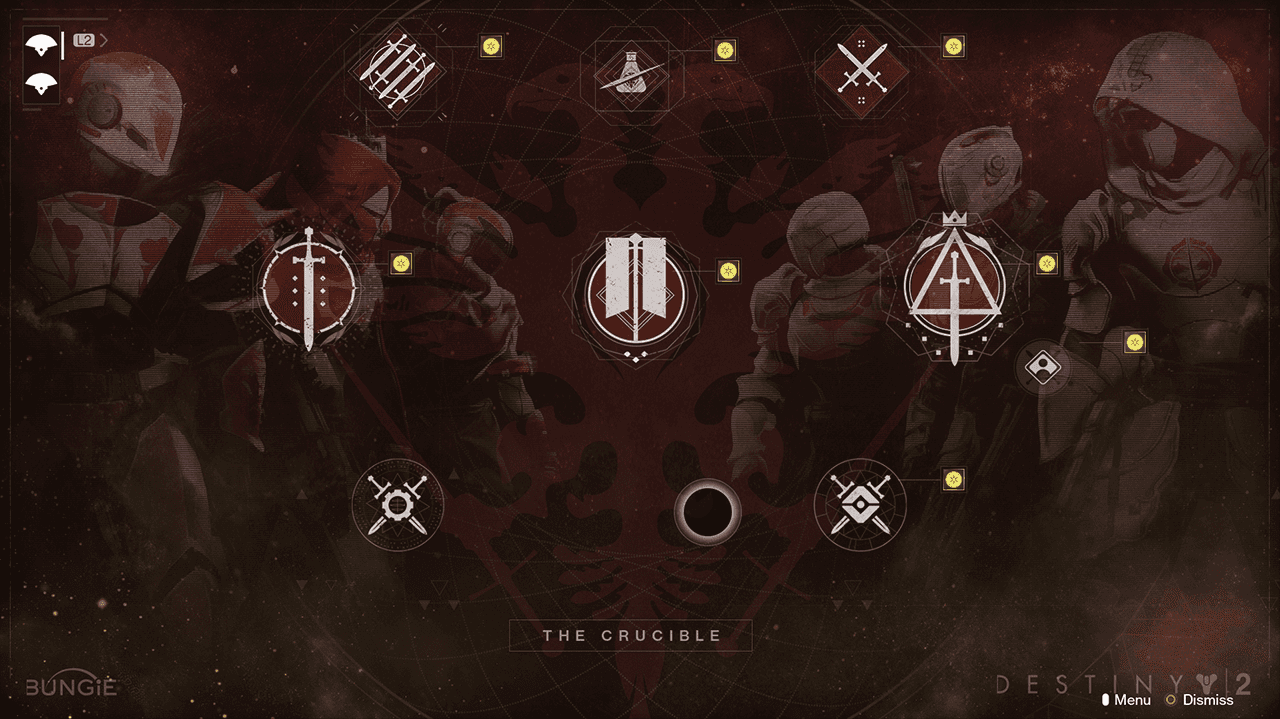
Final in-game implementation with Iron Banner inactive.
Final in-game implementation with Iron Banner inactive.
Final in-game implementation with Iron Banner inactive.
Final in-game implementation with Iron Banner inactive.
Conclusion
While the task was challenging, the team was delighted with the results. Fans reacted positively to the Crucible changes, and we are now able to support a larger number of playlists for players to choose from.
While the task was challenging, the team was delighted with the results. Fans reacted positively to the Crucible changes, and we are now able to support a larger number of playlists for players to choose from.
While the task was challenging, the team was delighted with the results. Fans reacted positively to the Crucible changes, and we are now able to support a larger number of playlists for players to choose from.
While the task was challenging, the team was delighted with the results. Fans reacted positively to the Crucible changes, and we are now able to support a larger number of playlists for players to choose from.